Email marketing
When to send a newsletter: day, time and a testing method
What day and time should you send a newsletter? Practical B2B and B2C starting points, a simple test method and the metrics to track.

For a B2B newsletter, start by testing Tuesday, Wednesday or Thursday between 9 am and 11 am. For a consumer audience, test late afternoon, evening or a weekend slot that fits the offer. These are starting points, not a magic formula: the best time is the one that generates clicks, replies or sales from your own list.
The short answer: start with a credible slot, then test it
Common email marketing patterns point to the same broad idea: business sends often perform well midweek and in the morning, but the difference depends heavily on the audience. Tuesday, Wednesday or Thursday around 10 am in the recipient's time zone is a reasonable starting point to test.
Do not choose a time just because a benchmark calls it perfect. Use benchmarks to avoid guessing, then learn from your own audience. A nonprofit mobilising volunteers, a consultancy writing to directors and a shop promoting a weekend offer are not read at the same moment.
A simple starting point: if you are new to newsletters, schedule three comparable campaigns on Tuesday, Wednesday or Thursday at the same time. That gives you a more useful baseline than changing the day, time, subject line and audience in every send.
Which slots should you test first?
The slots below are working hypotheses, not promises. They help you begin without pretending to know your subscribers' habits. Audience, day and time matter more than a universal rule.
| Audience | Days to test | Times to test | Why start there? |
|---|---|---|---|
| Small businesses and B2B services | Tuesday to Thursday | 9 am to 11 am | Professional inboxes are often checked early in the workday. |
| Nonprofits and communities | Tuesday to Thursday | Late morning or late afternoon | The right time mostly follows members' routines and the type of call to action. |
| Shops and consumer audiences | Thursday to Sunday | Late afternoon, evening or weekend | Test when customers have time to discover an offer or buy. |
| Editorial newsletters | Tuesday, Thursday or Saturday | Morning or early evening | Available reading time can matter more than commercial urgency. |
Monday morning is often crowded and Friday afternoon can be less suitable for professional messages. That does not make them forbidden: an event reminder, a weekend offer or an expected update can justify another slot.
Find your best send time in four steps
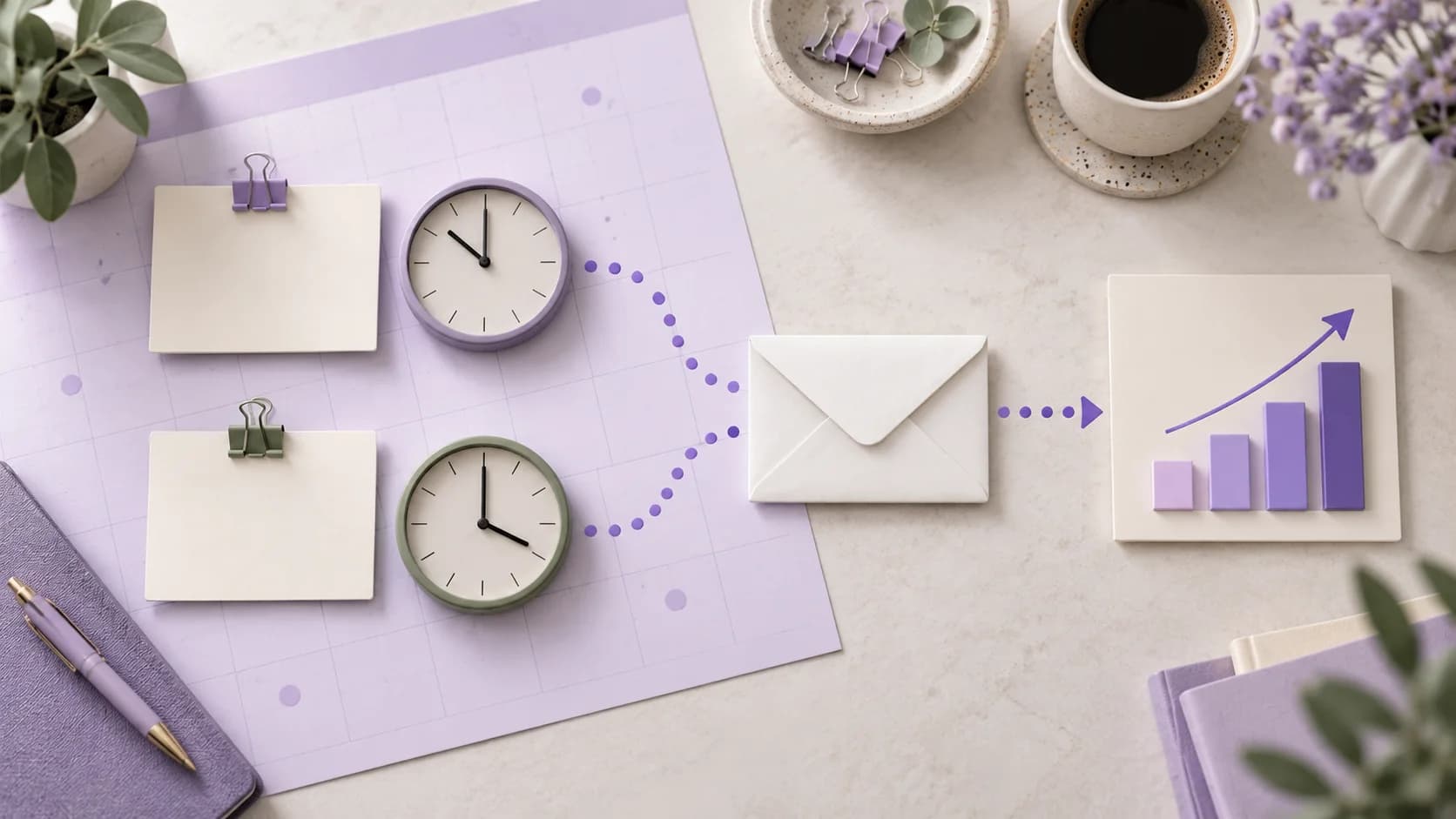
1. Pick an observable goal
Define what you expect before sending: a click to a page, event registration, a booked meeting, a purchase or a reply. The best send time is not the one with the most reported opens; it is the one that supports your real objective.
2. Keep the context comparable
Where possible, compare similar campaign types with a similar segment. An exceptional promotion and a long educational article are not directly comparable. Keep the sender, subject-line approach and call to action consistent before drawing conclusions about timing.
3. Change one variable at a time
Change the day or the time, not both together. For example, first compare Tuesday at 10 am with Thursday at 10 am. In the next cycle, compare Tuesday at 10 am with Tuesday at 4 pm. That makes observed differences easier to interpret.
4. Repeat before deciding
A single campaign can be influenced by news, seasonality, offer quality or list fatigue. Repeat each slot across several sends and retain the one that shows a stable pattern. With a small list, prioritise regularity and qualitative replies over sweeping conclusions based on a few clicks.
Which results matter?
Open rate remains an indication, but it should not make the decision alone. Privacy protections in some email clients can make it harder to know whether an email was actually opened. Pair opens with signals that are closer to your goal.
- Unique clicks: helpful when the campaign drives readers to a page, registration or resource.
- Replies: valuable for advisory newsletters, nonprofits and B2B relationships.
- Conversions: a booking, purchase, demo request or completed form.
- Unsubscribes and complaints: watch them if a timing or frequency appears poorly received.
Our guide to email open and click rates explains how to interpret these indicators without mistaking a one-off increase for a genuine improvement.
Mistakes to avoid
- Following a benchmark word for word: a general indication cannot replace your list's habits.
- Testing once: an isolated result does not justify a durable schedule.
- Changing everything at once: separate timing from the subject line, content and segment if you want to learn.
- Forgetting time zones: schedule in the recipient's local time when your audience is spread out.
- Neglecting regularity: a useful, expected newsletter at a predictable time is better than constant optimisation without a clear appointment.
If you are still preparing your first campaign, start with our small-business email campaign guide. Before increasing your sending rhythm, also review how to clean an email list.
Frequently asked questions
What day should I send a B2B newsletter?
Tuesday, Wednesday and Thursday are useful starting days for a B2B audience. Then test a consistent time, often between 9 am and 11 am, with your own list before turning it into a rule.
Should I avoid Friday?
Not automatically. Friday may be less suited to a long B2B message, but can work for an offer, event or weekend-related content. Your clicks and conversions are better evidence than a general rule.
How can I test with a small list?
Choose two or three plausible slots, keep the segment and goal comparable, then repeat them across several campaigns. Look at clicks, replies and conversions; do not rely on opens alone.